






Nonfiction
eBook
Details
PUBLISHED
DESCRIPTION
1 online resource
ISBN/ISSN
LANGUAGE
NOTES
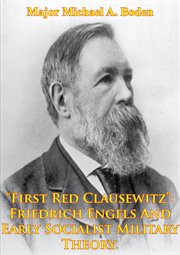
Between the European revolutions of the mid-nineteenth century and the Franco-Prussian War in 1870, Friedrich Engels functioned as a writer, analyst, and critic concerning military affairs. His most essential commentaries were published, disseminated, and internalized by supporters of the proletarian revolution. This project concentrates on the tactical, operational, and technical aspects of Engels' military thought and the development of his concepts from his earliest writings until the Franco-Prussian War. Historians and commentators routinely ignore these aspects of military theory in examinations of Engels' work. This project will demonstrate that Engels possessed are markable level of military knowledge and a degree of insight at the operational and tactical levels of warfare and that that he should be considered not only as an important social and economic thinker, but also among the most significant contributors to the field of nineteenth-and twentieth-century military history and theory. Engels' most significant contributions exist in the manner by which he, as a key member of the socialist leadership in the nineteenth century, integrated the concept of armed insurgency into the conduct of a proletarian revolution. By drawing on the experiences of the French Revolution and the wars of Napoleon, and then the impact of mass-industrialization, Engels was the first person to specifically incorporate a force dynamic into the trajectory of a socialist revolution. Despite the fact that he was a civilian with no formal military training beyond service as a Prussian artilleryman in 1842, his contributions to the field of revolutionary military theory earn him distinction as one of the most important socialist writers of the nineteenth century
Mode of access: World Wide Web