




Nonfiction
eBook
Details
PUBLISHED
DESCRIPTION
1 online resource
ISBN/ISSN
LANGUAGE
NOTES
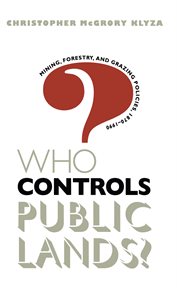
In this historical and comparative study, Christopher McGrory Klyza explores why land-management policies in mining, forestry, and grazing have followed different paths and explains why public-lands policy in general has remained virtually static over time. According to Klyza, understanding the different philosophies that gave rise to each policy regime is crucial to reforming public-lands policy in the future. Klyza begins by delineating how prevailing policy philosophies over the course of the last century have shaped each of the three land-use patterns he discusses. In mining, the model was economic liberalism, which mandated privatization of public lands; in forestry, it was technocratic utilitarianism, which called for government ownership and management of land; and in grazing, it was interest-group liberalism, in which private interests determined government policy. Each of these philosophies held sway in the years during which policy for that particular resource was formed, says Klyza, and continues to animate it even today
Mode of access: World Wide Web