




Nonfiction
eBook
Details
PUBLISHED
DESCRIPTION
1 online resource
ISBN/ISSN
LANGUAGE
NOTES
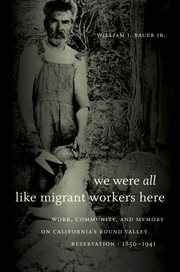
The federally recognized Round Valley Indian Tribes are a small, confederated people whose members today come from twelve indigenous California tribes. In 1849, during the California gold rush, people from several of these tribes were relocated to a reservation farm in northern Mendocino County. Fusing Native American history and labor history, William Bauer Jr. chronicles the evolution of work, community, and tribal identity among the Round Valley Indians in the nineteenth and twentieth centuries that enabled their survival and resistance to assimilation. Drawing on oral history interviews, Bauer brings Round Valley Indian voices to the forefront in a narrative that traces their adaptations to shifting social and economic realities, first within unfree labor systems, including outright slavery and debt peonage, and later as wage laborers within the agricultural workforce. Despite the allotment of the reservation, federal land policies, and the Great Depression, Round Valley Indians innovatively used work and economic change to their advantage in order to survive and persist in the twentieth century. We Were All Like Migrant Workers Here relates their history for the first time
Mode of access: World Wide Web