






Nonfiction
eBook
Details
PUBLISHED
Made available through hoopla
DESCRIPTION
1 online resource
ISBN/ISSN
LANGUAGE
NOTES
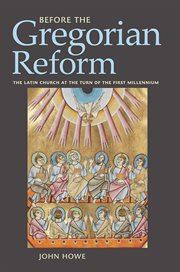
Historians typically single out the hundred-year period from about 1050 to 1150 as the pivotal moment in the history of the Latin Church, for it was then that the Gregorian Reform movement established the ecclesiastical structure that would ensure Rome's dominance throughout the Middle Ages and beyond. In Before the Gregorian Reform John Howe challenges this familiar narrative by examining earlier, "pre-Gregorian" reform efforts within the Church. He finds that they were more extensive and widespread than previously thought and that they actually established a foundation for the subsequent Gregorian Reform movement. The low point in the history of Christendom came in the late ninth and early tenth centuries-a period when much of Europe was overwhelmed by barbarian raids and widespread civil disorder, which left the Church in a state of disarray. As Howe shows, however, the destruction gave rise to creativity. Aristocrats and churchmen rebuilt churches and constructed new ones, competing against each other so that church building, like castle building, acquired its own momentum. Patrons strove to improve ecclesiastical furnishings, liturgy, and spirituality. Schools were constructed to staff the new churches. Moreover, Howe shows that these reform efforts paralleled broader economic, social, and cultural trends in Western Europe including the revival of long-distance trade, the rise of technology, and the emergence of feudal lordship. The result was that by the mid-eleventh century a wealthy, unified, better-organized, better-educated, more spiritually sensitive Latin Church was assuming a leading place in the broader Christian world. Before the Gregorian Reform challenges us to rethink the history of the Church and its place in the broader narrative of European history. Compellingly written and generously illustrated, it is a book for all medievalists as well as general readers interested in the Middle Ages and Church history
Mode of access: World Wide Web