



Nonfiction
eBook
Details
PUBLISHED
Made available through hoopla
DESCRIPTION
1 online resource
ISBN/ISSN
LANGUAGE
NOTES
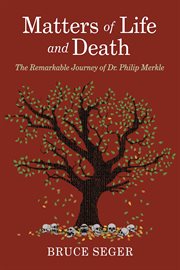
Through genealogical research, I learned that Dr. Philip Merkle was part of my family history. As I perused information about him, references abounded: numerous 19th century newspaper articles, bibliographies which included his name and led to information about him from various sources, and even a doctoral thesis written in 1956 Germany which included his actions against oppression in Germany. During his education at Gymnasium and the University of Heidelberg, his life's mission and philosophy to eradicate injustice, bias, and intolerance, took form. His actions in Germany forced his emigration, and he adopted America as his country. During his lifetime in the United States, he attained positions as pharmacist, physician, examiner of drugs, interpreter, excise commissioner, coroner, civic leader, and theologian in New York City (where he lived for the majority of his life). This allowed for his ongoing pursuit of equality for humanity. By authoring the book in an autobiographic, historical novel format, it allows the main character to narrate, comment, and offer opinions. The book is a blend of fiction and nonfiction. The 19th century characters, events, and articles presented are nonfiction, including information about Philip's personal life (incarceration, conflict, tragedy, and infidelity). However, many of the viewpoints of the narrator are gleaned from the anecdotes and memorabilia passed down to me by prior generations. The assumptions drawn from those reminiscences and other findings about his life's actions are relayed in an interpretive style. The volume depicts life and events during 19th century Germany, New York City, and St Louis, Missouri where some of his relatives settled. The stage is set throughout to immerse the reader in the time frame and offer a backdrop of imagery to experience 19th century life: aromas of vineyards and flowers, smells of animal and human waste, overcrowded tenements, infidelity, poverty, rampant disease, epidemics, outhouses, attire, artistic events, inventions, horse drawn carriages, the founding of the Metropolitan Museum of Art, Carnegie Hall, Mercantile Library, Lenox Library, New York Public Library, Central Park, Fraunces Tavern, Delmonico's Restaurant, the introduction of popcorn, bananas, lager beer, Fleischmann breads, economic depressions, the inception of bread lines and more. I am sure Philip would be amazed to witness New York City and the rest of the nation 120 years after his death: over 5,000,000 increase in New York City population, computers and other technological inventions, men, women, and children's attire, modes of transportation, the 1919 ratification of the Eighteenth Amendment prohibiting intoxicating liquors, the 1933 passage of the Twenty-first Amendment repealing the Eighteenth Amendment, the Nineteenth Amendment granting women the right to vote, and many other changes. He would also be pleased to observe the continued mission for inclusion of all differences, (but saddened regarding the slow pace at which it is occurring) disheartened to witness the ongoing poverty, the relentless anti-immigrant sentiment, and political views that resemble the Know Nothing movement
Mode of access: World Wide Web