






Nonfiction
eBook
Details
PUBLISHED
Made available through hoopla
DESCRIPTION
1 online resource
ISBN/ISSN
LANGUAGE
NOTES
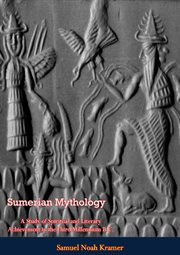
The Sumerians were a non-Semitic, non-Indo-European people who flourished in southern Babylonia from the beginning of the fourth to the end of the third millennium B.C. During this long stretch of time the Sumerians, whose racial and linguistic affiliations are still unclassifiable, represented the dominant cultural group of the entire Near East. This cultural dominance manifested itself in three directions: 1. It was the Sumerians who developed and probably invented the cuneiform system of writing which was adopted by nearly all the peoples of the Near East and without which the cultural progress of western Asia would have been largely impossible. 2. The Sumerians developed religious and spiritual concepts together with a remarkably well integrated pantheon which influenced profoundly all the peoples of the Near East, including the Hebrews and the Greeks. Moreover, by way of Judaism, Christianity, and Mohammedanism, not a few of these spiritual and religious concepts have permeated the modern civilized world. 3. The Sumerians produced a vast and highly developed literature, largely poetic in character, consisting of epics and myths, hymns and lamentations, proverbs and "words of wisdom." These compositions are inscribed in cuneiform script on clay tablets which date largely from approximately 2000 B.C
Mode of access: World Wide Web