




Nonfiction
eBook
Details
PUBLISHED
Made available through hoopla
DESCRIPTION
1 online resource
ISBN/ISSN
LANGUAGE
NOTES
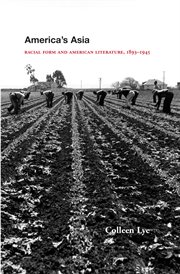
What explains the perception of Asians both as economic exemplars and as threats? America's Asia explores a discursive tradition that affiliates the East with modern efficiency, in contrast to more familiar primitivist forms of Orientalism. Colleen Lye traces the American stereotype of Asians as a "model minority" or a "yellow peril"--two aspects of what she calls "Asiatic racial form"-- to emergent responses to globalization beginning in California in the late nineteenth century, when industrialization proceeded in tandem with the nation's neocolonial expansion beyond its continental frontier. From Progressive efforts to regulate corporate monopoly to New Deal contentions with the crisis of the Great Depression, a particular racial mode of social redress explains why turn-of-the-century radicals and reformers united around Asian exclusion and why Japanese American internment during World War II was a liberal initiative. In Lye's reconstructed archive of Asian American racialization, literary naturalism and its conventions of representing capitalist abstraction provide key historiographical evidence. Arguing for the profound influence of literature on policymaking, America's Asia examines the relationship between Jack London and leading Progressive George Kennan on U.S.-Japan relations, Frank Norris and AFL leader Samuel Gompers on cheap immigrant labor, Pearl S. Buck and journalist Edgar Snow on the Popular Front in China, and John Steinbeck and left intellectual Carey McWilliams on Japanese American internment. Lye's materialist approach to the construction of race succeeds in locating racialization as part of a wider ideological pattern and in distinguishing between its different, and sometimes opposing, historical effects
Mode of access: World Wide Web