






Nonfiction
eBook
Details
PUBLISHED
Made available through hoopla
DESCRIPTION
1 online resource
ISBN/ISSN
LANGUAGE
NOTES
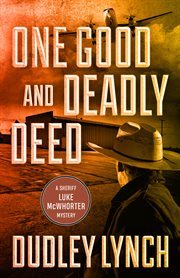
Sheriff Luke McWhorter is back with another sharp supernatural procedural It was not Luke McWhorter's plan to become a law enforcement officer when he left for Yale Divinity School. But three generations of his family had worn the star, and after graduation, the needs of his community called him home to serve and protect. His theological training and his seventeen-year career as sheriff suddenly collide when bodies start piling up in Flagler, Texas. Two pilots are found brutally murdered in McWhorter's hometown, torn to pieces by their own plane's propeller, next to an ominous warning written in blood on the hanger wall. In this fast-moving whodunit, McWhorter needs all the help he can get. He is joined by his chief deputy, Charles "Chuck" Del Emma; his FBI-agent girlfriend, Angie Steele; a precocious college student; and a 4,000-year-old mummy. Together, they tackle a crime spree that reaches all the way to the Middle East and back to the time of Noah's Ark. Sheriff Luke McWhorter is back! Sheriff Luke must figure out what is causing bodies to pile up in the Texas town of Flagler after two pilots are found brutally murdered in McWhorter's hometown, torn to pieces by their own plane's propeller, next to an ominous warning written in blood on the hangar wall. Dudley Lynch was born in Tennessee but raised in an oft-moving preacher's family, mostly on the southern Great Plains. With two degrees in mass communications and religion, he has written hundreds of magazine articles, 16 non-fiction books, and the first Luke McWhorter novel, A Fragment Too Far. He lives in Gainesville, Florida. Chapter 1 The fact that none of the body parts was covered told me no one from the Dr. Konstantina Smyth's office had arrived at the hangar yet. Doc Konnie was adamant about not contaminating a victim's remains. The fastest way to get on her bad side was to throw a plastic sheet or a tarp or a couple of towels over a corpse. Or over body parts. And it wasn't only our outspoken Greek-born medical examiner who was dyspeptic on the subject. It was the law. I memorized the statute word for word. This way, I could spell it out in no uncertain terms when people at a crime scene got careless about keeping their hands off the deceased. Or, for that matter, off the dead person's possessions. I'd point out that anyone who-quote, unquote-willfully touches, removes, or disturbs the body, clothing, or any article upon or near the body…shall be guilty of a misdemeanor of the first degree. So in West Texas's Abbot County, at a crime scene involving loss of life, even we law enforcement types waited for the M.E.'s white van to show up. Until then, we looked for clues elsewhere. Maybe close by. Maybe around the perimeter of the crime scene. Or else we stood around and waited. When I entered the hangar, that's what a half-dozen persons were doing. Standing a few steps inside the door. Gossiping. Kibitzing. Pointing. Waiting. All of them were dressed like I was-in protective gear. But they were acting like they'd just gotten out of church. Now, clustered there in a group, they were enjoying a social moment before heading to the parking lot. Or maybe I was thinking that because I'd stepped out of a church building a few minutes ago myself. A church building where I'd been the preacher. I was quite certain there were other sheriffs in America who preached. Because about anyone can run for sheriff. That includes country preachers, many of them self-taught in theology. Some of them preached every Sunday morning. But I wasn't one of those. This was the first sermon I'd preached since becoming sheriff nearly 17 years ago. I had a copy of the church program jammed in my inside coat pocket. The cover offered the bare details of the morning's activities. Today's sermon by Sheriff Luthe
Mode of access: World Wide Web