






Nonfiction
eBook
Details
PUBLISHED
Made available through hoopla
DESCRIPTION
1 online resource
ISBN/ISSN
LANGUAGE
NOTES
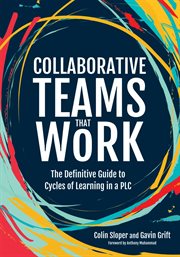
Collaborative Teams That Work is the ultimate guide to excellent collaboration. To support your PLC's path forward, authors Colin Sloper and Gavin Grift outline 12 specific actions that lead to greater, more effective teamwork. Rely on this resource as you set up your collaborative teams, and then refer back to it before, during, and after meetings to maintain focus on the right work. - Understand the positive effects of collaboration in education. - Examine the cycle of learning and how it optimizes education for both students and teachers. - Implement 12 actions to collaborate more effectively. - Adapt the cycle of learning and collaborative techniques to other types of educational teams. - See the big picture of collaboration and how the learning cycle fits into the educational system over many years. Contents: Preface Foreword Introduction Section 1: Preparing the Learning Action 1: Map the Learning Pathway Action 2: Prepare the Preassessment Action 3: Administer the Preassessment Action 4: Respond to Identified Student Learning Needs Action 5: Design the Learning Program Section 2: Implementing the Learning Action 6: Implement the Learning Program Action 7: Monitor the Impact of Instruction Action 8: Analyze Which Instructional Practices Are Having the Greatest Impact Action 9: Adopt the Most Impactful Instructional Practices Section 3: Reviewing the Learning Action 10: Administer the Postassessment Action 11: Determine the Team's Impact on Student Learning Action 12: Action the Team's Learnings Section 4: Adopting an Alternative Approach Preparing the Inquiry Action 1: Identify the Learning Issue Action 2: Prepare the Preassessment Action 3: Administer the Preassessment Action 4: Respond to Identified Student Learning Needs Action 5: Design Actions to Address the Learning Issue Implementing the Inquiry Action 6: Implement the Learning Actions Action 7: Monitor the Impact of Actions Action 8: Analyze Which Actions Are Having the Greatest Impact Reviewing the Learning Action 9: Administer the Postassessment Action 10: Determine the Team's Impact on Student Learning Action 11: Action the Team's Learnings Section 5: Putting It All Together Conclusion Appendix A Appendix B References
Mode of access: World Wide Web