






Nonfiction
eBook
Details
PUBLISHED
Made available through hoopla
DESCRIPTION
1 online resource
ISBN/ISSN
LANGUAGE
NOTES
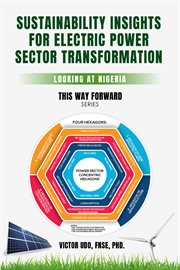
This book presents the electric power sector as the combination of Alternating Current (AC) and Direct Current (DC) systems into an infrastructural value chain managed by a value constellation of stakeholders. The demand for global sustainability and emerging technological convergences are synergizing to transformation the sector towards de-carbonization enabled by digitalization and decentralization. The book provides insights on this simultaneously evolutionary and revolutionary process that will help Nigeria as a metaphor of underperforming sectors to leapfrog into improved service provisioning for customers and the general public. Presently across the globe in most modern societies, AC and DC generation and consumption of electricity is performed at a very large-scale integrated system known as the electric power infrastructure or grid (with new technology and demand for sustainability, this mostly centralized grid approach is transforming. Large-scale infrastructure requires certain competencies to develop, implement and manage effectively for the general good of the society. Both the existing and emerging grid architecture and the required competency in the sector cover the local to global polity (village, community, locality, state, region, national, international). With appropriate leadership, these infrastructural value chain and constellation of stakeholder ensure customer satisfaction while enabling social sustainability, technological sustainability, and environmental sustainability even as technology convergence drives the transformation of the sector. These two domains that determine the success of functional electric power sectors are the infrastructural value chain and utility services competencies contemporarily being transformed by synergetic impacts of technological convergence and the emerging hierarchical grid architecture. Together, these four drivers are summarized as four (4) power sector concentric hexagons. Infrastructural value chain domain includes the following critical sub-systems in the sector: - Prime Resource - the type of energy to be converted into electricity - Generation - conversion of other energy forms to electricity - Storage - preservation of generated electricity for future use - Transmission - the movement of bulk energy for delivery - Distribution - delivery of electricity at the point of consumption - Consumption - conversion of electricity to end-use - Revenue Collection - the metering, billing, and payment systems - Customer Care - human and technologies systems for customers support. Utility service core competency is the most important domain in the electric power sector. It has to do with people - human capital. Utility services core competency involves human capital development and institutional capacity of every participant in the stakeholder's value constellation supporting and enabling the physical infrastructure with people, process and technology (PPT): - Public Policy - adopted decisions for the general good of society - Corporate Governance - accountability, fairness, and transparency - Strategic Management - the setting of direction for longer-term results - Engineering, Design and Construction - technology deployment - Supply Chain and Procurements - inputs logistics and deliveries - Stakeholders Relationships - management of key affiliates - Finance, Accounting and Administration - Operations, Scheduling and Maintenance - the day-to-day management of both human and other resources. Technological convergences are the drivers of the leapfrogging PPT changes that is ongoing and is expected to continue in the sector across at least six specific areas: - Distributed Energy Resources (DER) and Smart Grids that is decentralizing and digitalizing both the grid and the sector processes h
Mode of access: World Wide Web