






Nonfiction
eBook
Details
PUBLISHED
Made available through hoopla
DESCRIPTION
1 online resource
ISBN/ISSN
LANGUAGE
NOTES
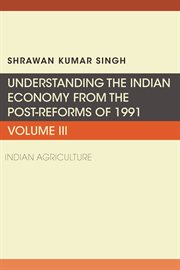
In 1991, India adopted liberal and free-market principles and liberalized its economy. The economic reforms provided the market orientation to the economy to improve efficiency and productivity. The country's economic growth progressed with a relatively moderate increase in per-capita income. The economic reform has brought the challenge and the economy is in an adjustment mode the important factor is the smooth implementation of reforms. Currently India is called a developing economy. Macroeconomic variables help in obtaining a picture of major structural changes in India's economy. Such changes accompany economic development. The economy of India is the fifth-largest in the world by nominal GDP and the third-largest by purchasing power parity (PPP). The country is one of the G-20 major economies and a member of BRICS. According to the IMF, on a per-capita-income basis, India ranked 142nd by nominal GDP and 126th by GDP (PPP) in 2018. India is the 21st largest exporter and the 11th largest importer in the world. For the sake of analysis, the book will be divided into the following seven parts: Part I Anatomy of Indian Economy; Part II Agriculture Reforms; Part III Industrial Reforms; Part IV Financial Sector Reforms; Part V Fiscal and Monetary Policy Reforms; Part VI External Sector Reforms; Part VII Contemporary Issues in Indian Economy
Mode of access: World Wide Web