




Nonfiction
eBook
Details
PUBLISHED
Made available through hoopla
DESCRIPTION
1 online resource
ISBN/ISSN
LANGUAGE
NOTES
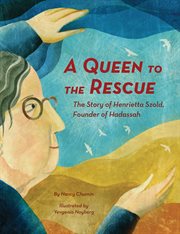
Henrietta Szold took Queen Esther as a model and worked hard to save the Jewish people. In 1912, she founded the Jewish women's social justice organization, Hadassah. Henrietta started Hadassah determined to offer emergency medical care to mothers and children in Palestine. When WWII broke out, she rescued Jewish children, from the Holocaust, and broadened Hadassah's mission to include education, youth development, and women's rights. Hadassah offers free help to all, who need it and continues its mission to this day. Henrietta Szold dedicated her entire life to aiding the most vulnerable. As a young child she saw her mother and rabbi father helping escaped slaves in Civil War-era Baltimore. She felt a connection to the Purim holiday and a kinship with Queen Esther, who bravely saved the Jews from the evil Haman. Although women had few opportunities to be, heard, Henrietta was determined to emulate Esther and make a difference in the world. She saw Jewish immigrants facing dire poverty and discrimination and took the first of many giant leaps. She opened a night school for immigrants to learn English, and she became the first editor of the Jewish Publication Society. She founded Hadassah-using Queen Esther's Hebrew name-a women's organization dedicated to raising funds to address hunger and disease among people of every faith in British-controlled Palestine, and established her own residence there. When Hitler came to power, she worked tirelessly to rescue as many Jewish children as possible and, with the support of Hadassah, saved thousands. Churnin presents Szold's accomplishments with careful attention to historical accuracy. The explanation of Hitler's extreme actions to destroy all Jews is informative, cogent, and accessible to young readers. The author's tone is admiring, stressing Szold's determination, courage, and endless compassion and reiterating her connection to the lessons of Purim. Nayberg employs light and shadow with elongated figures to illustrate the events and express the entire range of emotions felt by Szold, the people with whom she worked, and those whose lives she affected
Mode of access: World Wide Web