





Nonfiction
eAudiobook
Details
PUBLISHED
Made available through hoopla
EDITION
DESCRIPTION
1 online resource (1 audio file (9hr., 13 min.)) : digital
ISBN/ISSN
LANGUAGE
NOTES
Read by the author
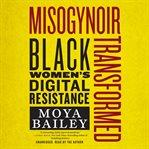
Where racism and sexism meet-an understanding of anti-Black misogyny When Moya Bailey first coined the term misogynoir, she defined it as the ways anti-Black and misogynistic representation shape broader ideas about Black women, particularly in visual culture and digital spaces. She had no idea that the term would go viral, touching a cultural nerve and quickly entering into the lexicon. Misogynoir now has its own Wikipedia page and hashtag, and has been featured on Comedy Central's The Daily Show and CNN's Cuomo Prime Time. In Misogynoir Transformed, Bailey delves into her groundbreaking concept, highlighting Black women's digital resistance to anti-Black misogyny on YouTube, Facebook, Tumblr, and other platforms. At a time when Black women are depicted as more ugly, deficient, hypersexual, and unhealthy than their non-Black counterparts, Bailey explores how Black women have bravely used social-media platforms to confront misogynoir in a number of courageous-and, most importantly, effective-ways. Focusing on queer and trans Black women, she shows us the importance of carving out digital spaces, where communities are built around queer Black webshows and hashtags like #GirlsLikeUs. Bailey shows how Black women actively reimagine the world by engaging in powerful forms of digital resistance at a time when anti-Black misogyny is thriving on social media. A groundbreaking work, Misogynoir Transformed highlights Black women's remarkable efforts to disrupt mainstream narratives, subvert negative stereotypes, and reclaim their lives. "Bailey has written a powerful book that explores the reach and impact of her groundbreaking idea-misogynoir. She centers her analysis on what she calls the margins of Black womanhood, illustrating both the many ways misogynoir has negatively shaped the life chances of Black women, and the many ways cis, queer, and trans Black women and nonbinary, agender, and gender-variant Black folks are using digital tools to resist harm, define their complexity, and create new narratives of Black women's lives, health, and futures. Misogynoir Transformed is an important Black queer feminist text that implores us to think differently and expansively about Black women, resistance, and power in the twenty-first century." "Misogynoir Transformed is a resounding, deftly reported manifesto centering the work of transformative Black women seeking one another in a culture that refuses to see us and center us. Moya Bailey reminds us that we are our liberators and have always had the tools to seek, see, and celebrate ourselves." "Misogynoir Transformed is meticulously researched and an extraordinary example of Black feminist studies as an interdisciplinary project. It is brilliant in its exploration of the ways in which Black women, especially queer, nonbinary, agender, gender-variant, and trans women resist misogynoir in various media in their roles as "digital alchemists." The book underscores the urgency of reimagining how we define women's social movements given the use of social media platforms among Black women and girls in their mitigation of misogynoir." "Bailey's arguments about the Internet as a worldbuilding and alchemical address to misogynoir-the overlapping harms that queer and nonconforming black women confront as part of the price of living their lives-are strong and compelling, especially when supported by data about mortality and police violence, domestic violence, and mental health among the LGBTQ community. Misogynoir Transformed shows how queer black women have created their own health resources online to fill in the deficiencies created by racism, sexism, and homophobia."
Mode of access: World Wide Web