



Details
PUBLISHED
Made available through hoopla
EDITION
DESCRIPTION
1 online resource (1 audio file (4hr., 14 min.)) : digital
ISBN/ISSN
LANGUAGE
NOTES
Read by Christopher Kendrick
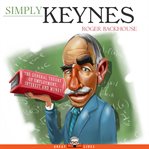
Born in Cambridge, England, to an upper-middle-class family, John Maynard Keynes (1883-1946) attended Eton College and King's College, Cambridge, where he received a BA in mathematics in 1904. From an early age, he evinced an optimism about improving human life and believed in the power of government to change things for the better. During World War I, Keynes served in the Treasury and his success in this role led to his appointment as a representative to the Versailles peace conference in 1919. While this experience was ultimately frustrating and disillusioning, it laid the foundation for his later work during the Great Depression and World War II, when his ideas gained increasing influence and were gradually adopted by economic policymakers throughout the world. In Simply Keynes, Professor Roger Backhouse provides a comprehensive introduction to Keynes and Keynesianism, arguing that Keynes should be seen not only as an economist, but also as a moral philosopher who believed the state had a moral obligation to intervene for the greater good. Beginning with the economist's early life and the context in which his ideas arose, Professor Backhouse chronicles the transformation of economics in the so-called "Age of Keynes," the opposition that arose in the 1970s, and the revival of Keynesianism following the 2007-08 global financial crisis. For 100 years, the ideas of John Maynard Keynes have been central to discussions and decision-making about economics, free markets, and the role of government in capitalist systems. With admirable concision and clarity, Simply Keynes allows the lay reader to understand not only the critical importance of Keynes's ideas in recent history, but also their continued relevance in our own day and into the future
Mode of access: World Wide Web