





Details
PUBLISHED
Made available through hoopla
DESCRIPTION
1 online resource
ISBN/ISSN
LANGUAGE
NOTES
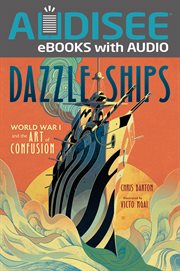
Audisee® eBooks with Audio combine professional narration and sentence highlighting for an engaging read aloud experience! A visually stunning look at innovative and eye-popping measures used to protect ships during World War I. During World War I, British and American ships were painted with bold colors and crazy patterns from bow to stern. Why would anyone put such eye-catching designs on ships? Desperate to protect ships from German torpedo attacks, British lieutenant-commander Norman Wilkinson proposed what became known as dazzle. These stunning patterns and colors were meant to confuse the enemy about a ship's speed and direction. By the end of the war, more than four thousand ships had been painted with these mesmerizing designs. Author Chris Barton and illustrator Victo Ngai vividly bring to life this little-known story of how the unlikely and the improbable became just plain dazzling. "[A] conversational, compelling, and visually arresting story . . ."-starred, Publishers Weekly "Barton's lively text is matched by Ngai's engrossing artwork, which employs dazzle techniques throughout her inventive spreads."-The Bulletin of the Center for Children's Books New York Public Library Best Books for Kids Children's Book Committee at Bank Street College Best Children's Book of the Year "During World War I, the British were in danger of starving because so many German U-boats were sinking American and British supply ships. Eventually, Norman Wilkinson, a Royal Naval Volunteer Reserve lieutenant-commander, had the idea to paint boats in such a manner as to confuse the German submarine captains, and the concept of 'dazzle ships' was born. Barton chronicles the creation and implementation of the strategy, including the team of women artists who designed the patterns and the laborers who painted the ships. Readers learn that the wild, striped designs fooled the U-boat captains into thinking the Allies' ships were headed in opposite directions, thus leading to confusion and failed offenses for the Germans. The well-written, intriguing text is complemented by Ngai's vibrant and surreal illustrations that skillfully recreate the glittering water and the striking camouflaged vessels. Students will appreciate the information, while taking in the amazing artwork. More material is provided by author's and illustrator's notes at the end. In addition to the back matter, photographs of Wilkinson and one of the dazzle ships are also included. VERDICT With the commemoration of the centenary of World War I, this book is a fascinating selection that will captivate readers, especially war story enthusiasts."-School Library Journal "Dazzling in their own right, newcomer Ngai's illustrations strikingly depict the dazzle ships of WWI, more than 4,000 British and U.S. merchant and warships that were painted with wild colors and patterns. These 'dazzle' designs, explains Barton (88 Instruments), 'were supposed to confuse German submarine crews about the ships' direction and speed' and keep them safer from torpedo fire. Ngai runs with the camouflage theme in energetic scenes that are crisscrossed with geometric and organic patterns and lines: in one spread, the uniform jacket of British naval officer Norman Wilkinson, who proposed the dazzle painting idea, is masked by the curvilinear patterns and hues of the ocean waves in the background. 'Sometimes desperate times call for dazzling measures,' writes Barton in conclusion, underscoring the importance of creative problem solving. Reflective author and artist notes, a timeline with b&w photographs, and a reading list wrap up a conversational, compelling, and visually arresting story that coincides with the 100th anniversary of its subject."-starred, Publishers Weekly "A German U-boat raises its periscopes, sights a target vessel, and launches a torpedo timed to explode just as the ship crosses its trajectory. It's hard to defend against, and as of ea
Mode of access: World Wide Web