




Nonfiction
eBook
Details
PUBLISHED
Made available through hoopla
DESCRIPTION
1 online resource
ISBN/ISSN
LANGUAGE
NOTES
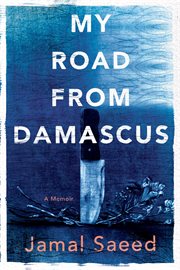
An extraordinary account of survival in Syria's most notorious military prisons that is written with "brutal clarity - and yet, there is a poetic quality to the telling." - Frances Itani, award-winning author of Deafening and Remembering the Bones Jamal Saeed arrived as a refugee in Canada in 2016. In his native Syria, as a young man, his writing pushed both social and political norms. For this reason, as well as his opposition to the regimes of the al-Assads, he was imprisoned on three occasions for a total of 12 years. In each instance, he was held without formal charge and without judicial process. My Road from Damascus not only tells the story of Saeed's severe years in Syria's most notorious military prisons but also his life during the country's dramatic changes. Saeed chronicles modern Syria from the 1950s right up to his escape to Canada in 2016, recounting its descent from a country of potential to a pawn of cynical and corrupt powers. He paints a picture of village life, his youthful love affairs, his rebellion as a young Marxist, and his evolution into a free thinker, living in hiding as a teenager for 30 months while being hunted by the secret police. He recalls his brutal prison years, his final release, and his family's harrowing escape to Canada. While many prison memoirs focus on the cruelty of incarceration, My Road from Damascus offers a tapestry of Saeed's whole life. It looks squarely at brutality but also at beauty and poetry, hope and love. Humorous, witty, horrific, and poetic, Jamal Saeed's story is Syria's story: surviving 12 years in brutal military prisons, an enchanted childhood, his loves, Syria's deadly upheavals, and his family's escape. Jamal Saeed spent 12 years as a prisoner of conscience in Syria before being invited to Canada in 2016. He continues to raise awareness about Syria's ongoing civil war and humanitarian crisis through his work as an activist, editor, visual artist, and author. He lives in Kingston, ON. Waiting to be executed, I remember as clearly as if I could see them, many of the other people I'd known in different Syrian towns: children, men, and women, old and young; relatives, friends, and those who'd shared in the painful experiences of prison; interrogators out of control in the interrogation branch in Latakia; doomsday in cellblock seven in the military's special investigation branch in Damascus; prisoners of conscience, murderers, thieves, drug dealers, cats, rats, and police in al-Qala'a prison; bodies exhausted by fear, faces distorted by terror, souls brutalized by humiliation in Tadmur prison. The faces of women I'd loved and cried over when they left, and those of the ones who loved me and who cried when I left. Informers for the intelligence services who visited me diligently after my release on the pretext of asking after my health. A great gathering of people, birds, beasts, with their features crystal clear; springs, rivers, different places by the sea, rough tracks, paved roads, and even familiar rocky outcrops. I am completely absorbed by this throng of images, smells, and the sounds my memory yields, sharper and more delicate than I would have believed possible, and in that moment I really forget where I am. I don't think about how my brazen answers to the officer had just slammed the door on my future. I am devouring life avidly as if it only existed in the past when the door of the interrogation room opens and footsteps approach. I brace myself for the end, but nothing. If only I could move my hand, I would pull the blindfold away from my eyes. Has the soldier who entered the room changed his mind and left again? Or is he standing close to me this very second? I picture the room full of instruments of torture: an old tire, electric cables, clubs, a German chair, water, and a packet of pins on the metal table where the interrogator usually sat. Big strong torturers no more
Mode of access: World Wide Web