






Nonfiction
eBook
Details
PUBLISHED
Made available through hoopla
DESCRIPTION
1 online resource
ISBN/ISSN
LANGUAGE
NOTES
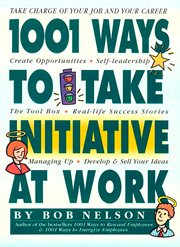
1001 WAYS to Take Initiative at Work is about managing up--about employees taking ownership of their jobs, whether it's an assistant working for a manager or a VP working for the CEO. Third in the 1001 Ways series by bestselling business writer Bob Nelson, whose 1001 Ways to Reward Employees and 1001 Ways to Energize Employees have over 900,000 copies in print, TAKE INITIATIVE is the first management book for employees. Weaving together case studies, examples, quotes, research highlights, and the author's own "Tool Box" of management techniques and exercises, this practical handbook will show every reader how to develop self-leadership, set goals, create learning opportunities, take risks, build a team, sell ideas, and work both within and outside the larger organization. Taking initiative is about a former secretary at Johnsonville Foods who originated and now runs the company's thriving mail-order business. It's about a technical writer who created Xerox's popular "webmaster" website. And it's about you. As Bob Nelson proves, employees have much more power than they think--taking initiative is how to harness that power and reap its rewards. By the bestselling author of 1001 Ways to Reward Employees and 1001 Ways to Energize Employees, with over 900,000 copies in print. Bob Nelson, Ph.D., is the president of Nelson Motivation, Inc., a management training and consulting company. He has written numerous books on management and business skills, including the bestselling 1001 Ways series (1001 Ways to Reward Employees, 1001 Ways to Energize Employees, 1001 Ways to Take Initiative at Work) and Managing for Dummies. He lives in San Diego, California. Introduction to Part I Employees who make the personal decision to strive for something more than just the status quo are the lifeblood of every successful organization today. Taking initiative is a key ingredient in making improvements at work, dealing with change, and providing customers with service that is far beyond their expectations. Initiative is personal: the individual controls when, where, and how much initiative to take on the job. Even though its impact may be felt throughout an organization, initiative starts with the employee--and what he or she can do on a daily basis. In a recent online survey by iVillage.com, employees were asked, "What is most important for getting ahead in the workplace?" Of the 7,760 people who cast their votes, 55 percent said that "initiative" is most important, followed by "inspiration" (17 percent), "intelligence" (16 percent), and "political savvy" (12 percent). (Comments about initiative taken from this survey are presented throughout this book.) Although employees often recognize the importance of taking initiative, they may be hesitant to do so. Part I provides both ideas and inspiration for taking initiative on the job to overcome obstacles--real or perceived--that may be holding you back. The chapters that follow provide a detailed overview of how you can take initiative, and in the process make a difference where you work. Whether it's tapping your inner creativity, taking needed action on a persistent problem, capitalizing on opportunities as they become available, or thinking up ways to improve your current work environment, the act of taking initiative will undoubtedly reenergize you, in addition to making your job much better and your organization more efficient and effective. By taking initiative, all employees can elevate their visibility within an organization and greatly improve their chances for recognition, learning, growth, pay raises, bonuses, and advancement for good performance. By focusing on what you can rather than can't do, and emphasizing possibilities in your own sphere of influence, you'll increase your chances to not only have greater impact at work but develop your skills on a local basis
Mode of access: World Wide Web