






Nonfiction
eBook
Details
PUBLISHED
Made available through hoopla
DESCRIPTION
1 online resource
ISBN/ISSN
LANGUAGE
NOTES
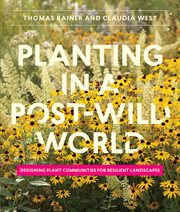
"As practical as it is poetic. . . . an optimistic call to action." -Chicago Tribune Over time, with industrialization and urban sprawl, we have driven nature out of our neighborhoods and cities. But we can invite it back by designing landscapes that look and function more like they do in the wild: robust, diverse, and visually harmonious. Planting in a Post-Wild World by Thomas Rainer and Claudia West is an inspiring call to action dedicated to the idea of a new nature-a hybrid of both the wild and the cultivated-that can flourish in our cities and suburbs. This is both a post-wild manifesto and practical guide that describes how to incorporate and layer plants into plant communities to create an environment that is reflective of natural systems and thrives within our built world. A richly illustrated and comprehensive guide to creating ecologically healthy landscapes that emulate nature from two of the leading names in landscape architecture. Thomas Rainer is a registered landscape architect, teacher, and writer. He has designed landscapes for the U.S. Capitol grounds, the Martin Luther King, Jr. Memorial, and The New York Botanical Garden. His work has been featured in the the New York Times, Landscape Architecture Magazine, and Home + Design. He is a principal for the landscape architectural firm Rhodeside and Harwell, teaches planting design for the George Washington University, and writer at the award-winning site Grounded Design. Claudia West is the ecological sales manager at North Creek Nurseries, a wholesale perennial grower in Landenberg, Pennsylvania. She holds a master's degree of landscape architecture and regional planning from the Technical University of Munich, Germany. West is a sought after speaker on topics such as plant community based design and the application of natural color theories to planting design. Introduction: Nature as It Was, Nature as It Could Be Imagine for a moment what it must have been like for the first European colonists arriving on the shores of America. The moment they first looked upon the vast, green breast of the continent, their heads full of new world dreams. By all accounts, the landscape they encountered was a place teeming with diversity, a place so resplendent and abundant with life that even our most cherished national parks pale in comparison. Hundreds of species of birds flew over the coastline; tens of thousands of different plants covered the forests, and billions of oysters and clams filled the estuaries. Botanical records and early diaries give us mere glimpses of the richness that once was. Just beyond the coastal plain, chestnut trees-some nine stories tall-accounted for fully half of the canopy of the Piedmont. These giants showered the ground with their mast, sustaining black bears, deer, turkey, and other creatures. Underneath the chestnuts, rivers of ferns, pools of ladies' slippers and orchids, and sparkling stands of trout lily and false rue anemone-now rare collector's specimens-covered the forest floor. It was a paradise of native species. But to the early colonists, it was a moral and physical wilderness which required great ingenuity and perseverance to tame. And now we have tamed that landscape. This primal wilderness of our ancestors is utterly gone. Compared with the rich diversity of the past, the modern tableau is a tragedy. Through great engineering and skill, we have drained the Everglades, turned the great American prairie into grids of corn and soybean, and erected Manhattan out of the swamps of the Lenape. The splendor of what once was now exists in isolated fragments, a pale reflection of its former glory. In this light, the recent rally around native plants bears a bit of irony. The belated rediscovery of the virtues of native plants comes at the moment of their definitive decline in the wild. Conservatio
Mode of access: World Wide Web