




Details
PUBLISHED
Made available through hoopla
DESCRIPTION
1 online resource
ISBN/ISSN
LANGUAGE
NOTES
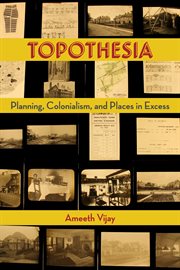
Topothesia reads urban planning as a mode of speculative fiction, one inextricably linked to histories of British colonialism and liberalism through a particular understanding of place. The book focuses on town planning from the late nineteenth century to the present day, showing how the contemporary geography of Britain-sharply unequal and marked by racial division-continues ideologies of place established in colonial contexts. Specifically, planning allows for the speculative construction of future places that are both utopian in their ability to resolve political disagreement and at the same tantalizingly realizable, able to be produced in concrete reality. This speculative imaginary, I argue, is only possible within the ideological framework of colonialism and the history of empire within which it developed. Topothesia refers to a rhetorical device employing the vivid depiction of an often-imaginary place. This device, Vijay shows, helps us understand urban planning as a narrative genre, one that, even in its most mundane documents, is compelled to produce elaborate fantasies of future places. The book examines specific planning movements over time to understand the form and the stakes of their speculative worlds. In building these worlds, the book shows, planners continually coopted literary critiques of the present and reveries of the future, retaining literature's aesthetics while eschewing its politics. At the same time, Vijay shows, writers and artists have dwelled within and against these colonial imaginaries to seek other means of representing place
Mode of access: World Wide Web