






Nonfiction
eAudiobook
Details
PUBLISHED
Made available through hoopla
EDITION
DESCRIPTION
1 online resource (1 audio file (11hr., 06 min.)) : digital
ISBN/ISSN
LANGUAGE
NOTES
Read by Marisol Ramirez
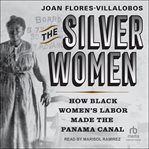
In The Silver Women, Joan Flores-Villalobos argues that Black West Indian women made the Panama Canal construction possible by providing the indispensable everyday labor of social reproduction. West Indian women built a provisioning economy that fed, housed, and cared for the segregated Black West Indian labor force, in effect subsidizing the construction effort and the racial calculus that separated pay in silver for Black workers and gold for white Americans. But while also subject to racial discrimination and segregation, West Indian women mostly worked outside the umbrella of US canal authorities. They did not hold contracts, had little access to official services and wages, and received pay in both silver and gold. From this position, they found ways to skirt, and at times subvert, the legal, moral, and economic parameters imperial authorities sought to impose on the migrant workforce. West Indian women developed important strategies of claims-making, kinship, community building, and market adaptation that helped them navigate the contradictions and violence of the US empire. These strategies of social reproduction nurtured further West Indian migrations, linking Panama to places like Harlem and Santiago de Cuba. The Silver Women is thus a history of Black women's labor of social reproduction as integral to US imperial infrastructure, the global Caribbean diaspora, and women's own survival
Mode of access: World Wide Web