


Nonfiction
eBook
Details
PUBLISHED
Made available through hoopla
DESCRIPTION
1 online resource
ISBN/ISSN
LANGUAGE
NOTES
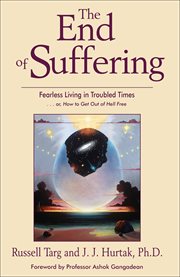
The hopeful teaching of this book is that while everybody suffers, most of this suffering is unnecessary-it can be overcome. The legacy of Aristotle is that we think that things must be either true or untrue. Thus we tend to think in terms of polarities: good or evil, right or wrong, Democrat or Republican. This friend-or-foe approach may seem to make life easier, but Russell Targ and J. J. Hurtak in The End of Suffering, assert that this worldview only increases our experience of suffering.In an effort to overcome the polarity of opposites and the accompanying suffering, Targ and Hurtak combine the wisdom of the East with the finding of quantum physics and uncover a middle ground that shows opposing sides are really the same.Buddha taught us to live a helpful and compassionate life and to surrender our ego to the peace of spaciousness. The middle path of Buddhism shows that things may also be neither true nor not true, or both true and untrue. Remarkably, recent discoveries in modern physics echo these ancient teachings.The End of Suffering puts these perceived opposites-Buddhism and physics-together and shows, step-by-step, how we can learn to surrender the story of who we think we are and experience an end to our suffering. "I have admired Russell Targ's insights for many years. The End of Suffering is an important contribution to consciousness evolution in our troubled times." --Deepak Chopra "Bravo to Russell Targ and J. J. Hurtak for gifting us with a practical book for a troubled time. This is truly philosophical dynamite." --Gerald G. Jampolsky, MD, bestselling author of Love is Letting Go of Fear "A brilliant, heart-filled book that teaches us something precious: how to lead compassionate, aware lives and overcome suffering. A must-read book for everyone!" --Judith Orloff, MD, author Positive Energy and Second Sight Russell Targ is currently "retired" and enjoys motorcycling in the Silcon Valley (even though he is legally blind) and studying Dzogchen Buddhism
Mode of access: World Wide Web