






Details
PUBLISHED
Made available through hoopla
DESCRIPTION
1 online resource
ISBN/ISSN
LANGUAGE
NOTES
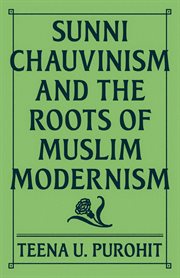
Teena U. Purohit is Associate Professor of Religion at Boston University. She is the author of The Aga Khan Case: Religion and Identity in Colonial India. Muslim intellectuals who sought to establish the boundaries of modern Muslim identity Muslim modernism was a political and intellectual movement that sought to redefine the relationship between Islam and the colonial West in the late nineteenth and early twentieth centuries. Spearheaded by Muslim leaders in Asia and the Middle East, the modernist project arose from a desire to reconcile Islamic beliefs and practices with European ideas of secularism, scientific progress, women's rights, and democratic representation. Teena Purohit provides innovative readings of the foundational thinkers of Muslim modernism, showing how their calls for unity and reform led to the marginalization of Muslim minority communities that is still with us today. Sunni Chauvinism and the Roots of Muslim Modernism offers fresh perspectives on figures such as Jamal al-Din al-Afghani, Muhammad Abduh, Muhammad Iqbal, and Abul A'la Mawdudi. It sheds light on the exclusionary impulses and Sunni normative biases of modernist Muslim writers and explores how their aim to unite the global Muslim community-which was stagnant and fragmented in their eyes-also created lasting divisions. While modernists claimed to represent all Muslims when they asserted the centrality and significance of unity, they questioned the status of groups such as Ahmadis, Bahais, and the Shia more broadly. Addressing timely questions about religious authority and reform in modern Islam, this incisive book reveals how modernist notions of Islam as a single homogeneous tradition gave rise to enduring debates about who belongs to the Muslim community and who should be excluded. "An intellectually-absorbing work. . . . The book's relevance extends far beyond academia. It provides invaluable insights into the modern-day challenges confronting Muslim societies across the world."---Saleem Rashid Shah, The Wire "This book is essential reading for anyone interested in Muslim modernism and its continuing impact on Muslim societies today. Purohit's astute analysis of intellectuals ranging from al-Afghani to Iqbal to Mawdudi and beyond-people not often brought into the same frame-shows how their definitions of Islam reflected specifically Sunni norms. This narrowing of what constitutes legitimate Islam is crucial to understanding global Islam today, as it helps make sense of contemporary politics aimed at marginalizing minority Muslim communities."-Farina Mir, University of Michigan "This boldly conceived book enables us to rethink the categories of Muslim modernism, fundamentalism, and militancy in unexpected new ways."-Faisal Devji, author of Muslim Zion: Pakistan as a Political Idea "Purohit offers original insights into how the contemporary notions of true, authentic, and universal Islam derive not from Muslim religious obligation but from the Muslim response to European colonialism and Eurocentric notions of modernity. She persuasively demonstrates that modernist reformists share responsibility for building the foundations of current exclusionary monolithic interpretations of Sunni Islam."-Cemil Aydin, author of The Idea of the Muslim World
Mode of access: World Wide Web