






Nonfiction
eBook
Details
PUBLISHED
Made available through hoopla
DESCRIPTION
1 online resource
ISBN/ISSN
LANGUAGE
NOTES
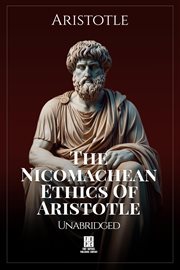
The Greek philosopher and polymath Aristotle coined the word "ethics" to describe the field of study developed by his predecessors Plato and Socrates which examined how human beings should best live their lives. In their writings, these men sought to describe aspirational goals and societal mores that human civilization should value and encourage, with an emphasis on virtue. Men, Aristotle argued, should always attempt to do the right thing in any given situation. Aristotle's best-known book on this subject is his "Nicomachean Ethics," a ten-book collection on the discipline of human virtue itself. In it, Aristotle asserts that being ethical is not simply knowing the proper way to behave in a society. To be ethical, one must actually strive to do the right thing every day, in every situation. This book was hugely influential on the English Middle Ages and became a foundational document for medieval theology. Aristotle's teachings would form the basis for modern philosophy, law and theology and his books and theories are studied, debated and discussed to this day. This publication of "The Nichomachean Ethics" is presented with an introduction and footnotes by renowned British philosopher J.A. Smith
Mode of access: World Wide Web