




Nonfiction
eAudiobook
Details
PUBLISHED
Made available through hoopla
EDITION
DESCRIPTION
1 online resource (1 audio file (10hr., 04 min.)) : digital
ISBN/ISSN
LANGUAGE
NOTES
Read by Mia Barron
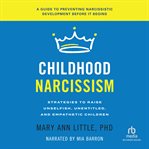
Notice the signs of narcissism in your child and act to curb them before it's too late! Narcissism is one of the most difficult disorders to treat in adults, but many of the symptoms and tendencies begin in childhood when it's easier to address and curtail such behaviors. Mary Ann Little helps parents recognize the symptoms and develop parenting practices that can reverse those behaviors before they become entrenched. Raising empathetic and unselfish young people in today's "all about me" world might seem impossible, but parents can insulate children from these harmful influences. Written by a psychologist with decades of clinical experience, "Childhood Narcissism" explains how selfish, entitled behavior can take root in a child and shows parents how to stop it before it's too late. Mary Ann Little identifies the early warning signs that can result in a full-blown narcissistic disorder in adulthood. As narcissism is most often anchored in childhood, waiting too long to address these tendencies can be costly. The book explores four psychological structures developing over childhood that nurture a child's healthy, realistic self-concept and positive model of love and relationships. However, if compromised, these structures can damage a child's emotional growth. Based on the latest research and theory, the book identifies four parent types that promote narcissistic development. These include hovering/directive, indulgent/permissive, critical/harsh, and inattentive/disengaged parenting. Without meaning to, such parents can create demanding children who do not see themselves realistically and struggle to build and sustain relationships. Sharing her own unique understanding of narcissism, Dr. Little explains that narcissists-to-be (N2Bs) either receive "too much" or "too little" of an essential something in their growing up. "Moderation parenting" is shown to be the key to raising empathetic, unentitled, and caring children
Mode of access: World Wide Web