



Details
PUBLISHED
Made available through hoopla
EDITION
DESCRIPTION
1 online resource (1 audio file (1080 min.)) : digital
ISBN/ISSN
LANGUAGE
NOTES
Read by Chukwudi Iwuji
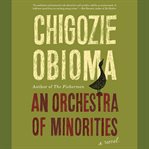
A heartbreaking story about a Nigerian poultry farmer who sacrifices everything to win the woman he loves, by Man Booker Finalist and author of The Fishermen, Chigozie Obioma. "It is more than a superb and tragic novel; it's a historical treasure."-Boston Globe Set on the outskirts of Umuahia, Nigeria and narrated by a chi, or guardian spirit, An Orchestra of Minorities tells the story of Chinonso, a young poultry farmer whose soul is ignited when he sees a woman attempting to jump from a highway bridge. Horrified by her recklessness, Chinonso joins her on the roadside and hurls two of his prized chickens into the water below to express the severity of such a fall. The woman, Ndali, is stopped her in her tracks. Bonded by this night on the bridge, Chinonso and Ndali fall in love. But Ndali is from a wealthy family and struggles to imagine a future near a chicken coop. When her family objects to the union because he is uneducated, Chinonso sells most of his possessions to attend a college in Cyprus. But when he arrives he discovers there is no place at the school for him, and that he has been utterly duped by the young Nigerian who has made the Penniless, homeless, and furious at a world which continues to relegate him to the sidelines, Chinonso gets further away from his dream, from Ndali and the farm he called home. Spanning continents, traversing the earth and cosmic spaces, and told by a narrator who has lived for hundreds of years, the novel is a contemporary twist of Homer's Odyssey. Written in the mythic style of the Igbo literary tradition, Chigozie Obioma weaves a heart-wrenching epic about destiny and determination. Chigozie Obioma was born in Akure, Nigeria. His debut novel, The Fishermen, is winner of the inaugural FT/Oppenheimer Award for Fiction, the NAACP Image Awards for Debut Literary Work, and the Art Seidenbaum Award for First Fiction (Los Angeles Times Book Prizes); and was a finalist for the Man Booker Prize 2015, as well as for several other prizes in the US and UK. Obioma was named one of Foreign Policy's 100 Leading Global Thinkers of 2015. His work has been translated into more than 25 languages and adapted into stage. He is an assistant professor of Literature and Creative Writing at the University of Nebraska-Lincoln. His second novel, An Orchestra of Minorities, was a finalist for the 2019 Booker Prize. "This is a book that wrenches the heart with its story of love, migration and inner turmoil, told with remarkable language from start to finish. Narrated by a cast of characters from Igbo spiritual tradition, the story of Chinonso, the chicken farmer begins and ends with tragedy. But his quest for a life with Ndali, the woman he loves, drives him to seek status and wealth as an African migrant in Europe, to transcend Nigeria's formidable class boundaries. The spirits look down on these human dramas of small town Nigeria and reveal the rich complexity of another realm along the way. Obioma's is a tale of Odyssian proportions that makes the heart soar, and a crucial journey into a heartache that is both mythical and real. A stunning book."-Booker Prize 2019 Jury citation "Gorgeously written, with a twist of magical realism and a heavy dose of sad reality."-Washington Post "Transcendent . . . Chigozie Obioma's second novel is a rare treasure: a book that deepens the mystery of the human experience."-Seattle Times "Igbo and Greek mythology are braided into this heartbreaking and utterly unique novel"-Boris Kacka, Vulture "Obioma's frenetically assured second novel is a spectacular artistic leap forwards . . . [it is] a linguistically flamboyant, fast-moving, fatalistic saga of one man's personal disaster . . . Few contemporary novels achieve the seductive panache of Obioma's heightened language, with its mixture of English, Igbo and colourful African-English phrases, and the startling clarity of the dialogue. The story is extreme; yet its theme is a bid for mercy
Mode of access: World Wide Web