




Nonfiction
eAudiobook
Details
PUBLISHED
Made available through hoopla
EDITION
DESCRIPTION
1 online resource (1 audio file (13hr., 45 min.)) : digital
ISBN/ISSN
LANGUAGE
NOTES
Read by Arnell Powell, Kim Staunton
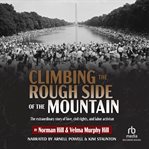
The remarkable story of a couple who came together during the Civil Rights Movement and made fighting for equality and civil and workers' rights their purpose for more than sixty years, overcoming adversity-with the strength of their love and commitment-to bring about meaningful change. Norman Hill was the national program director of the Congress of Racial Equality (CORE), staff coordinator for the 1963 March on Washington for Jobs and Freedom, staff representative of the Industrial Union Department of the AFL-CIO, and president of the A. Philip Randolph Institute from 1980 to 2004, the longest tenure in the organization's history. He remains its president emeritus. Velma Murphy Hill, a graduate of the Harvard Graduate School of Education, was a leader of the Chicago Wade-in to integrate Rainbow Beach, East Coast field secretary for CORE, and assistant to the president of the United Federation of Teachers, where she unionized 10,000 paraprofessionals, primarily Black and Hispanic, working in New York public schools. She was vice president of the American Federation of Teachers and International Affairs and civil rights director of the Service Employees International Union. The Hills were the only Black couple to hold leadership positions in the civil rights and labor movements. When Velma Murphy was knocked unconscious by a brick thrown by a man from an angry white mob and was carried away by Norman Hill, it was the beginning ofa six-decade-long love story and the turmoil, excitement, and struggle for civil rights and labor movements. In Climbing the Rough Side of the Mountain, the Hills reflect upon their more than half century of fighting to make America realize the best of itself. Through profound conversations between the two, Velma and Norman Hill share their earliest memories of facing racial segregation in the 1960s, working with Martin Luther King, Jr., Bayard Rustin, and A. Philip Randolph, crossing paths with Malcolm X and Stokely Carmichael. They also reveal how they kept white supremacists like David Duke from taking office, organized workers into unions, met with Presidents Bill Clinton and Barack Obama, and continued to work tirelessly, fighting the good fight and successfully challenging power with truth
Mode of access: World Wide Web