






Nonfiction
eBook
Details
PUBLISHED
Made available through hoopla
DESCRIPTION
1 online resource (240 pages)
ISBN/ISSN
LANGUAGE
NOTES
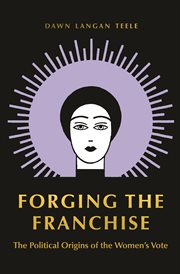
"Winner of the Luebbert Best Book Award, Comparative Politics Section of the American Political Science Association" Dawn Langan Teele is the Janice and Julian Bers Assistant Professor in the Social Sciences at the University of Pennsylvania. She is the editor of Field Experiments and Their Critics. The important political motivations behind why women finally won the right to vote In the 1880s, women were barred from voting in all national-level elections, but by 1920 they were going to the polls in nearly thirty countries. What caused this massive change? Why did male politicians agree to extend voting rights to women? Contrary to conventional wisdom, it was not because of progressive ideas about women or suffragists' pluck. In most countries, elected politicians fiercely resisted enfranchising women, preferring to extend such rights only when it seemed electorally prudent and in fact necessary to do so. Through a careful examination of the tumultuous path to women's political inclusion in the United States, France, and the United Kingdom, Forging the Franchise demonstrates that the formation of a broad movement across social divides, and strategic alliances with political parties in competitive electoral conditions, provided the leverage that ultimately transformed women into voters. As Dawn Teele shows, in competitive environments, politicians had incentives to seek out new sources of electoral influence. A broad-based suffrage movement could reinforce those incentives by providing information about women's preferences, and an infrastructure with which to mobilize future female voters. At the same time that politicians wanted to enfranchise women who were likely to support their party, suffragists also wanted to enfranchise women whose political preferences were similar to theirs. In contexts where political rifts were too deep, suffragists who were in favor of the vote in principle mobilized against their own political emancipation. Exploring tensions between elected leaders and suffragists and the uncertainty surrounding women as an electoral group, Forging the Franchise sheds new light on the strategic reasons behind women's enfranchisement. "The book presents a compelling strategic explanation for the recognition of women's voting rights. However, perhaps the most interesting aspect of this work is that it analyses the development of women's enfranchisement in the general framework of the democratization process. The book helps to fill that gap and is a significant contribution toward a holistic understanding of the emergence and consolidation of democratic regimes."---Arantxa Elizondo, Democratization "This book is well worth reading and will probably disrupt the literature on democratisation and make its way onto reading lists in a variety of fields that deal with the enfranchisement of women and electoral reform. It is a very worthy book, deserving of high praise for clarity and common sense."---Nicoletta F. Gullace, History: Journal of the Historical Association "This book examines the circumstances under which governments gave the right to vote to women in the United States, France, and England. Focusing on the strategic interactions between suffrage activists and elected politicians that led male legislators to approve suffrage bills, Teele's account challenges the conventional wisdom that usually highlights increasing militancy among suffragettes and changing cultural norms and public opinion about women. A pleasure to read."-Lisa Baldez, Dartmouth College "Why did women get the vote when and where they did? This brilliant book places women's suffrage where it belongs: as central to the historical processes of democratization, and as a critical consequence of women's mobilization, political competition, and the shifting interests of previously skeptical politicians and political parties. For scholars of regime change, electoral realignment, and party competition, Forging the Fr
Mode of access: World Wide Web