






Nonfiction
eBook
Details
PUBLISHED
Made available through hoopla
DESCRIPTION
1 online resource
ISBN/ISSN
LANGUAGE
NOTES
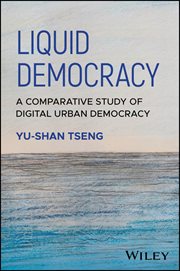
"This timely book carefully interrogates the increasingly fraught intersections of the digital, the city, and democracy. It is a book that will endure, bristling as it is with thoughtful reflection and insight on the democratic challenges that unfold amidst the ordinary, troubled and generative digital worlds of cities as different as Madrid, Taipei and Helsinki. Amidst the work of policymakers, activists, and engineers, what emerges is a hopeful exploration of what 'digital democracy platforms' might enable." -Professor Colin McFarlane, Durham University "This vital book moves beyond a universal analysis of the effects of social media platforms on liberal democracy. Through an in-depth examination of civic platforms in Finland, Spain and Taiwan, Tseng provides a compelling and nuanced empirical and theoretical analysis of the contingent relationship between platforms, place and democracy." -Professor Rob Kitchin, Maynooth University Reimagining Democracy in the Digital and Urban Age How can democracy adapt and thrive in a world reshaped by artificial intelligence and digital platforms? In Liquid Democracy, author Yu-Shan Tseng offers a bold new framework for understanding democracy as a dynamic, fluid process. Challenging the idea that AI and digital tools are inherently anti-democratic, this innovative volume bridges theory and practice to investigate various "liquid conditions," a novel concept capturing how political action flows and transforms like water within the intersections of urban spaces and digital technologies. Through an in-depth comparative study of three groundbreaking digital democracy platforms-Decide Madrid in Madrid, OmaStadi in Helsinki, and vTaiwan in Taipei-Tseng explores how digital platforms can foster participatory governance, pluralism, and alternative democratic futures. In-depth chapters critically examine the interactions between humans, algorithms, and urban systems, revealing how digital tools reconfigure the boundaries of political participation, decision-making, and collective action. Throughout the text, Tseng offers fresh insights into how democracy emerges under contingent conditions shaped by technology and geography. Drawing from years of ethnographic fieldwork, Liquid Democracy is essential reading for master's and PhD students in geography, political science, and urban studies, as well as scholars, practitioners, and policymakers interested in digital governance, smart cities, civic technology, and algorithmic politics
Mode of access: World Wide Web