






Details
PUBLISHED
Made available through hoopla
DESCRIPTION
1 online resource (105 pages)
ISBN/ISSN
LANGUAGE
NOTES
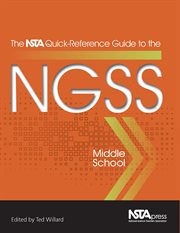
Since the release of the first draft of the Next Generation Science Standards (NGSS), NSTA has been at the forefront in promoting the standards and helping science educators become familiar with and learn to navigate this exciting but complex document. Later, when the final version was released and states began adopting the standards, NSTA started to develop resources that would assist educators with their implementation. Along the way, NSTA learned that even the simplest of resources, like a one-page cheat sheet, can be extremely useful. Many of those tools are collected here, including - a two-page "cheat sheet" that describes the practices, core ideas, and crosscutting concepts that make up the three dimensions described in A Framework for K-12 Science Education; - an "Inside the Box" graphic that spells out all of the individual sections of text that appear on a page of the NGSS; - a Venn diagram comparing the practices in NGSS, Common Core State Standards, Mathematics, and Common Core State Standards, English Language Arts; and - matrices showing how the NGSS are organized by topic and disciplinary core idea. This guide also provides the appropriate performance expectations; disciplinary core ideas; practices; crosscutting concepts; connections to engineering, technology, and applications of science; and connections to nature of science. It is designed to be used with the NGSS. The NSTA Quick-Reference Guides to the NGSS are also available in grade-specific versions-one each for elementary and high school-plus a comprehensive K-12 edition. The four Quick-Reference Guides are indispensable to science teachers at all levels, as well as to administrators, curriculum developers, and teacher educators
Mode of access: World Wide Web