






Nonfiction
eBook
Details
PUBLISHED
Made available through hoopla
DESCRIPTION
1 online resource
ISBN/ISSN
LANGUAGE
NOTES
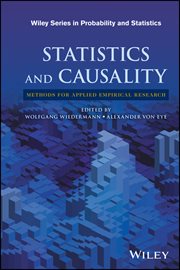
A one-of-a-kind guide to identifying and dealing with modern statistical developments in causality. Written by a group of well-known experts, "Statistics and Causality: Methods for Applied Empirical Research" focuses on the most up-to-date developments in statistical methods in respect to causality. Illustrating the properties of statistical methods to theories of causality, the book features a summary of the latest developments in methods for statistical analysis of causality hypotheses. The book is divided into five accessible and independent parts. The first part introduces the foundations of causal structures and discusses issues associated with standard mechanistic and difference-making theories of causality. The second part features novel generalizations of methods designed to make statements concerning the direction of effects. The third part illustrates advances in Granger-causality testing and related issues. The fourth part focuses on counterfactual approaches and propensity score analysis. Finally, the fifth part presents designs for causal inference with an overview of the research designs commonly used in epidemiology. "Statistics and Causality: Methods for Applied Empirical Research" also includes: - New statistical methodologies and approaches to causal analysis in the context of the continuing development of philosophical theories - End-of-chapter bibliographies that provide references for further discussions and additional research topics - Discussions on the use and applicability of software when appropriate "Statistics and Causality: Methods for Applied Empirical Research" is an ideal reference for practicing statisticians, applied mathematicians, psychologists, sociologists, logicians, medical professionals, epidemiologists, and educators who want to learn more about new methodologies in causal analysis. The book is also an excellent textbook for graduate-level courses in causality and qualitative logic
Mode of access: World Wide Web