






Details
PUBLISHED
Made available through hoopla
DESCRIPTION
1 online resource
ISBN/ISSN
LANGUAGE
NOTES
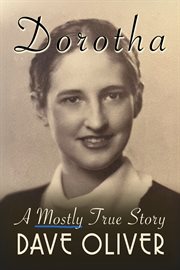
We meet Dorotha Mae Wallen on her wedding day, two weeks after her nineteenth birthday. It is December, 1935. Dorotha is a particularly beautiful brunette, bright, inquisitive and headstrong. Her spouse-to-be is a charismatic college student who also croons "Stardust" and other songs for Hoagy Carmichael's band. It is the dawning of the Big Band era and many exciting happenings in America. Dorotha is eager to enter into the holy state of matrimony, despite the obvious disapproval of her in-laws-to-be as well as the misgivings of her own parents. She doesn't even consider the predictable dynamics when her love's strict Army chaplain parents meet her professional gambler father and she completely ignores the challenges and cruelty of the Depression. Dorotha is blindly, gloriously and absolutely in love. She will remain so until the day she dies. We then turn back the clock ten years to follow Dorotha as she grows up on the bustling farm her Pop owns, reading books every possible moment she can steal away from chores. The farm lies just outside Decker, Indiana, population 468, a few miles north of the Mason-Dixon line. It is the land of Raintree County, where religious revivals bring snake healing as well as a few snake oil salesmen like Elmer Gantry. Decker is also located smack dab in the middle of tens of thousands of Ku Klux Klan members. As Indiana has a disproportionately low number of Negros, the local KKK focus their dreadful hated on Catholics and all others with the audacity not to conform. We see the beginning of Dorotha's lifetime struggle against prejudice and arrogance. In their home, Dorotha is one of the six daughters of two remarkable people, a gambler who wears two six-guns beneath his long white coats and a mother who, before her wedding, famously rode her horse bareback across Decker fields at night, clad only in a white shift, or, accounts vary, nothing at all. Within a few years Dorotha is off to college at Indiana University (only a few miles from where Daisy Buchanan of The Great Gatsby's fame grew up) where she continues to voraciously read, She meets her man, Dave, when she spies his barrel chest competing for the college swimming team that will become a national powerhouse. She is determined not to miss her life's mate. While both their sets of parents are well-to-do, the family considerations that Dorotha and Dave originally ignored mean that neither set of in-laws support them. It is the depression, and the young couple live more poorly than hand-to-mouth until Dave takes a job with the Pinkerton Security Agency and subsequently the FBI in Washington, DC. Unfortunately, Edgar Hoover soon removes the FBI from Civil Service and reduces everyone's pay. As Dorotha is now pregnant with their first child, Dave must job search again. No sooner does the young couple find Dave a blue collar job in Indianapolis, then the Japanese attack Pearl Harbor. Soon the Japs overrun Corregidor and capture Dave's father. Dave immediately enlists in the Navy and Dorotha, after unsuccessfully attempting to live with her mother-in-law, reluctantly returns to Decker to spend the war years praying for her husband. After the War, the family settles in Indianapolis, a few miles from Dorotha's best friend and sister, Lois (who has married Dave's brother). As Dorotha and Lois rear their double-cousin children, Dave becomes involved in the rise of union, a movement that in the Midwest is interwoven with the emotions of the Red Scare, McCarthyism and the monumental changes wrought by America;s manufacturing revolution. Dorotha becomes a true believer in the value of the union to the middle class, and, one snowy evening, resolves an increasingly violent strike by dynamiting a factory wall to force management to negotiate
Mode of access: World Wide Web