






Details
PUBLISHED
Made available through hoopla
EDITION
DESCRIPTION
1 online resource (1 audio file (1hr., 56 min.)) : digital
ISBN/ISSN
LANGUAGE
NOTES
Read by Saskia Higgins
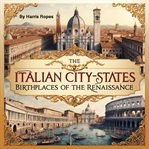
The Italian city-states emerged as powerful economic, political, and cultural centers during the late Middle Ages and early Renaissance. Unlike the feudal kingdoms of northern Europe, Italy developed a unique system of independent cities, each governed by its own political structure. These city-states, including Florence, Venice, Milan, and Genoa, thrived due to their strategic locations, economic prosperity, and the weakening of feudalism. Their rise laid the foundation for the Renaissance, a period of unprecedented artistic and intellectual achievement. One of the key factors behind the growth of the Italian city-states was the decline of feudalism. In much of Europe, feudal lords controlled vast territories, but in Italy, urban centers gained power as trade and commerce flourished. The weakening of the Holy Roman Empires authority in the region allowed cities to assert their independence. Many city-states established their own governments, often ruled by merchant families or oligarchies rather than hereditary monarchs. This shift created a political climate that encouraged innovation, diplomacy, and economic expansion. Geography also played a crucial role in the rise of these city-states. Italys position in the Mediterranean made it a central hub for trade between Europe, Asia, and North Africa. Cities like Venice and Genoa developed extensive maritime trade networks, importing luxury goods such as silk and spices while exporting textiles and banking services. The wealth generated from commerce enabled these cities to fund artistic and architectural projects, further elevating their cultural status
Mode of access: World Wide Web