



Nonfiction
eAudiobook
Details
PUBLISHED
Made available through hoopla
EDITION
DESCRIPTION
1 online resource (1 audio file (12hr., 15 min.)) : digital
ISBN/ISSN
LANGUAGE
NOTES
Read by Christopher Douyard
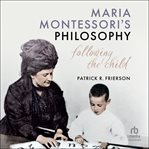
How Montessori's commitment to "follow the child" can be understood as a philosophical method for answering the great philosophical questions that confront human beings In Maria Montessori's Philosophy, Patrick R. Frierson discusses historical influences on Montessori's philosophical views, focusing on showing how her commitment to children led her to profound insights about a wide range of philosophical questions, from foundational metaphysics to applied ethics and politics. Her metaphysics, grounded in the concept of life as she observes it developing in the child, helps to address fundamental questions about the nature of the universe and the emergence of consciousness and value within it. Her pragmatic empiricist epistemology provides the framework for a sophisticated account of various intellectual virtues conducive to excellent cognitive engagement with reality. Her moral philosophy weaves together a broadly Nietzschean emphasis on self-perfection with respect for all human beings and a strong interest in social solidarity. In her philosophy of religion, she follows children as they guide her to recognize a sense for the divine and the importance of sensorily-informed religious practice. Her politics-informed by lifelong feminism and concern for peace-show how the education of the child is the key to cosmopolitan solidarity and lasting peace. Her philosophy of technology, while recognizing the dangers of technological development, also sees in children the human potential, and even vocation, to develop technology for the betterment of the world
Mode of access: World Wide Web