






Nonfiction
eBook
Details
PUBLISHED
Made available through hoopla
DESCRIPTION
1 online resource (345 pages)
ISBN/ISSN
LANGUAGE
NOTES
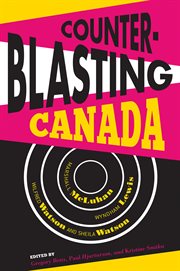
In 1914, Wyndham Lewis and Ezra Pound-the founders of vorticism-undertook an unprecedented analysis of the present, its technologies, communication, politics, and architecture. The essays in Counterblasting Canada trace the influence of vorticism on Marshall McLuhan and Canadian Modernism. Building on the initial accomplishment of the magazine Blast, McLuhan's subsequent Counterblast, and the network of artistic and intellectual relationships that flourished in Canadian vorticism, the contributors offer groundbreaking examinations of postwar Canadian literary culture, particularly the legacies of Sheila and Wilfred Watson. Intended primarily for scholars of literature and communications, Counterblasting Canada explores a crucial and long-overlooked strand in Canadian cultural and literary history. Contributors: Gregory Betts, Adam Hammond, Paul Hjartarson, Dean Irvine, Elena Lamberti, Philip Monk, Linda M. Morra, Kristine Smitka, Leon Surette, Paul Tiessen, Adam Welch, Darren Wershler. Situating the intellectual inheritance of Canadian vorticists in a multidisciplinary assemblage of authors and artists. Bibliography, notes, index "Reading Counterblasting Canada one has the impression that this quartet-Lewis, McLuhan, and Wilfred and Sheila Watson-and their thinking about culture touched just about every discipline and genre available in the mid to late twentieth century…. Finally, then, these collections not only open up new critical conversations about Watson and others, they remind us that our provocative predecessors are also mentors who might help us reimagine the liberal arts in the neo-liberal university." [Full review at ] "[The essays] coincide and illuminate a narrative attentive to modernist and postmodernist discourses, patterns of influence, media theory, and the future of the humanities more While every essay is rich in theory and critical reflection, it is witnessing career- and life-altering conversations unfold on every page of this book that is sometimes most engrossing. Those conversations are made all the more impressive by the archival research peppered The model of influence presented in Counterblasting Canada is compelling because it is partly a site of Counterblasting Canada will have obvious appeal to communications, media studies, or Canadian literature scholars (especially those interested in the recent conversationsabout later modernism, intermodernism, and the " Canadian Literature 232 (Spring 2017) [Full review at ] XI Acknowledgements XIII Introduction // Gregory Betts, Paul Hjartarson, and Kristine Smitka Analepsis 1 Remembering McLuhan // Leon Surette The Art of Being Read 2 The New Canadian Vortex: Marshall McLuhan and the Avant-Garde Function of Counter-Environments // Gregory Betts 3 Watson, McLuhan (& Lewis): Conscious (Modernist) Solitudes, Challenging Canadians // Elena Lamberti 4 Excellent Internationalists: How Sheila Watson and Marshall McLuhan Made Wyndham Lewis Influential // Adam Hammond II The Antennae of the Race 5 Dispatches from the DEW Line: McLuhan, Anti-Environments, and Visual Art across the Canada-US Border, 1966-1973 // Adam Welch 6 Wilfred Watson, Playwright: Writing (to) McLuhan // Paul Tiessen 7 Marshall McLuhan, General Idea, and Me! // Philip Monk III Art and Anti-Environment 8 Sheila Watson, Wyndham Lewis, and Men without Art // Dean Irvine 9 "His Name Is Felix": Artist as Catalytic Agent and the Counter-Environment in Sheila Watson's The Double Hook // Linda M. Morra 10 Magic, Monstrosity, and "the Mechanization of Death": Sheila Watson and Marshall McLuhan's Dialogue on Photography // Kristine Smitka Prolepsis 11 Marshall McLuhan as Vanishing Mediator // D
Mode of access: World Wide Web