



Details
PUBLISHED
Made available through hoopla
EDITION
DESCRIPTION
1 online resource (1 audio file (12hr., 15 min.)) : digital
ISBN/ISSN
LANGUAGE
NOTES
Read by Agnes Callard
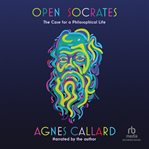
An iconoclastic philosopher revives Socrates for our time, showing how we can answer-and, in the first place, ask-life's most important questions. Socrates has been hiding in plain sight. We call him the father of Western philosophy, but what exactly are his philosophical views? He is famous for his humility, but readers often find him arrogant and condescending. We parrot his claim that "the unexamined life is not worth living," yet take no steps to live examined ones. We know that he was tried, convicted, and executed for "corrupting the youth," but freely assign Socratic dialogues to today's youths, to introduce them to philosophy. We've lost sight of what made him so dangerous. In "Open Socrates", acclaimed philosopher Agnes Callard recovers the radical move at the center of Socrates' thought, and shows why it is still the way to a good life. Callard draws our attention to Socrates' startling discovery that we don't know how to ask ourselves the most important questions-about how we should live, and how we might change. Before a person even has a chance to reflect, their bodily desires or the forces of social conformity have already answered on their behalf. To ask the most important questions, we need help. Callard argues that the true ambition of the famous "Socratic method" is to reveal what one human being can be to another. You can use another person in many ways-for survival, for pleasure, for comfort-but you are engaging them to the fullest when you call on them to help answer your questions and challenge your answers. Callard shows that Socrates' method allows us to make progress in thinking about how to manage romantic love, how to confront one's own death, and how to approach politics. In the process, she gives us nothing less than a new ethics to live by
Mode of access: World Wide Web