






Details
PUBLISHED
Made available through hoopla
DESCRIPTION
1 online resource
ISBN/ISSN
LANGUAGE
NOTES
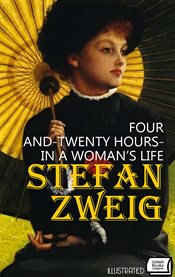
First published in 1927, Stefan Zweig's Four-and-Twenty Hours in a Woman's Life is one of his most acclaimed psychological novellas - a masterful study of passion, moral conflict, and the fragility of human will. Set against the refined backdrop of early twentieth-century Europe, the story captures a single day that transforms a woman's entire existence, exposing the turbulent depths beneath the surface of respectability. The narrative unfolds through the recollection of an elderly English widow who, in a moment of confession, reveals to a stranger the secret episode that changed her life forever. After years of restraint, she is suddenly consumed by compassion - and then by desire - for a desperate young gambler she encounters at a Monte Carlo casino. What follows is a cascade of emotion and impulse, a confrontation between social convention and the elemental forces of human longing. Zweig's psychological precision and moral sensitivity lend the story its enduring power. Every moment is charged with tension: the flicker of temptation, the pull of empathy, the sudden collapse of self-control. Through his luminous prose, he transforms a brief encounter into a profound exploration of the boundary between love and obsession, freedom and remorse. Four-and-Twenty Hours in a Woman's Life exemplifies Zweig's genius for distilling an entire human drama into a single, unforgettable moment. Both intimate and universal, it remains one of his finest meditations on the forces that drive and undo the human heart - a timeless portrait of passion, guilt, and redemption rendered with elegance and compassion
Mode of access: World Wide Web