






Nonfiction
eBook
Details
PUBLISHED
Made available through hoopla
DESCRIPTION
1 online resource (380 pages)
ISBN/ISSN
LANGUAGE
NOTES
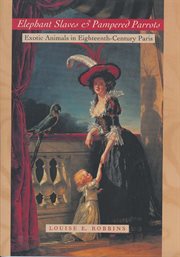
This lively history "adds a new dimension to our understanding of 18th-century France" by exploring the Parisian fashion of importing exotic animals (American Historical Review). In 1775, a visitor to Laurent Spinacuta's Grande Ménagerie at the annual winter fair in Paris would have seen two tigers, several kinds of monkeys, an armadillo, an ocelot, and a condor-in all, forty-two live animals. In the streets of the city, one could observe performing elephants and a fighting polar bear. Those looking for unusual pets could purchase parrots, flying squirrels, and capuchin monkeys. The royal menagerie at Versailles displayed lions, cranes, an elephant, a rhinoceros, and a zebra, which in 1760 became a major court attraction. For Enlightenment-era Parisians, exotic animals piqued scientific curiosity and conveyed social status. Their variety and accessibility were a boon for naturalists like Buffon, author of Histoire naturelle. Louis XVI use his menagerie to demonstrate his power, while critics saw his caged animals as metaphors of slavery and oppression. In her engaging account, Robbins considers nearly every aspect of France's obsession with exotic fauna, from the animals' transportation and care to the inner workings of the oiseleurs' (birdsellers') guild. Based on wide-ranging research, Elephant Slaves and Pampered Parrots offers a major contribution to the history of human-animal relations, eighteenth-century culture, and French colonialism
Mode of access: World Wide Web