




Nonfiction
eBook
Details
PUBLISHED
Made available through hoopla
DESCRIPTION
1 online resource (312 pages)
ISBN/ISSN
LANGUAGE
NOTES
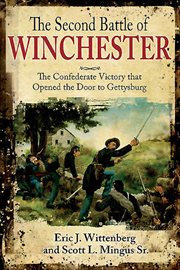
A comprehensive, deeply researched history of the pivotal 1863 American Civil War battle fought in northern Virginia. June 1863. The Gettysburg Campaign is underway. Robert E. Lee's Army of Northern Virginia pushes west into the Shenandoah Valley and then north toward the Potomac River. Only one significant force stands in its way: Maj. Gen. Robert H. Milroy's Union division of the Eighth Army Corps in the vicinity of Winchester and Berryville, Virginia. What happens next is the subject of this provocative new book. Milroy, a veteran Indiana politician-turned-soldier, was convinced the approaching enemy consisted of nothing more than cavalry or was merely a feint, and so defied repeated instructions to withdraw. In fact, the enemy consisted of General Lee's veteran Second Corps under Lt. Gen. Richard S. Ewell. Milroy's controversial decision committed his outnumbered and largely inexperienced men against some of Lee's finest veterans. The complex and fascinating maneuvering and fighting on June 13-15 cost Milroy hundreds of killed and wounded and about 4,000 captured (roughly one-half of his command), with the remainder routed from the battlefield. The combat cleared the northern end of the Shenandoah Valley of Federal troops, demonstrated Lee could obtain supplies on the march, justified the elevation of General Ewell to replace the recently deceased Stonewall Jackson, and sent shockwaves through the Northern states. Today, the Second Battle of Winchester is largely forgotten. But in June 1863, the politically charged front-page news caught President Lincoln and the War Department by surprise and forever tarnished Milroy's career. The beleaguered Federal soldiers who fought there spent a lifetime seeking redemption, arguing their three-day "forlorn hope" delayed the Rebels long enough to allow the Army of the Potomac to arrive and defeat Lee at Gettysburg. For the Confederates, the decisive leadership on display outside Winchester masked significant command issues buried within the upper echelons of Jackson's former corps that would become painfully evident during the early days of July on a different battlefield in Pennsylvania. Award-winning authors Eric J. Wittenberg and Scott L. Mingus Sr. combined their researching and writing talents to produce the most in-depth and comprehensive study of Second Winchester ever written. Their balanced effort, based upon scores of archival and previously unpublished diaries, newspaper accounts, and letter collections, coupled with familiarity with the terrain around Winchester and across the lower Shenandoah Valley, explores the battle from every perspective
Mode of access: World Wide Web