




Details
PUBLISHED
Made available through hoopla
DESCRIPTION
1 online resource (320 pages)
ISBN/ISSN
LANGUAGE
NOTES
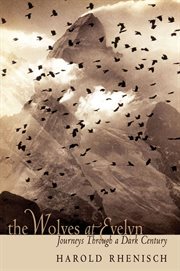
At once a memoir, a work of philosophy, a story of European immigration to Canada's dark places of the earth, and an exploration of the roots and effects of colonialism, The Wolves At Evelyn: Journeys Through a Dark Century is a stylistic and rhetorical tour de force from one of Canada's master prose stylists. Dissident communists fleeing 1920s Germany, Harold Rhenisch's grandparents imagined that British Columbia's Interior was the end of the earth-a new world where they could fulfil their dreams of the land, freed from tyrrany and from history itself. A generation later, in the wake of World War II, his father arrived, carrying many of the same ideas with him. What they found instead was a colonial culture as highly developed as Doris Lessing's Rhodesia. Rhenisch grew up at the nexus of these cultures: a Germany where Nazism simultaneously did and did not happen, a Canada in the process of shedding British colonialism for American, and a land-the Interior-that had no point of contact with any of them. With remarkable range and vision, Rhenisch turns in a bravura performance, sifting through the ashes of personal experience, family anecdotes, literature, art, history, and the land itself for clues to a great untold story, Rhenisch assembles a collage of images and ideas that becomes a whole much greater than the sum of its parts. The hidden history of a forgotten outpost of the Empire is laid open, shattering dearly held myths and exposing buried skeletons. How was the sunny, carefree Okanagan Valley fruit culture built on the back of King Leopold's Congolese slave trade? How does Margaret Atwood's garrison theory of literature reflect on Rhenisch family's hidden Nazi past? How did the Hudson's Bay Company Blanket act as both a cherished kitsch object for generations of Canadians and a tool of genocide? Alternating between light and darkness, great humour and sharp indignation, this is a disturbing, thought-provoking and important work from a masterful writer and cultural analyst. "Rhenisch proves that the unique adaptation of a magic-realist style to non-fiction, combined with an episodic structure that would be quicksand to most writers, wasn't just a brilliant fluke . . . but a technique he has mastered completely." At once a memoir, a work of philosophy, a story of European immigration to Canada's dark places of the earth, and an exploration of the roots and effects of colonialism, The Wolves At Evelyn: Journeys Through a Dark Century is a stylistic and rhetorical tour de force from one of Canada's master prose stylists. Dissident communists fleeing 1920s Germany, Harold Rhenisch's grandparents imagined that British Columbia's Interior was the end of the earth-a new world where they could fulfil their dreams of the land, freed from tyrrany and from history itself. A generation later, in the wake of World War II, his father arrived, carrying many of the same ideas with him. What they found instead was a colonial culture as highly developed as Doris Lessing's Rhodesia. Rhenisch grew up at the nexus of these cultures: a Germany where Nazism simultaneously did and did not happen, a Canada in the process of shedding British colonialism for American, and a land-the Interior-that had no point of contact with any of them. With remarkable range and vision, Rhenisch turns in a bravura performance, sifting through the ashes of personal experience, family anecdotes, literature, art, history, and the land itself for clues to a great untold story, Rhenisch assembles a collage of images and ideas that becomes a whole much greater than the sum of its parts. The hidden history of a forgotten outpost of the Empire is laid open, shattering dearly held myths and exposing buried skeletons. How was the sunny, carefree Okanagan Valley fruit culture built on the back of King Leopold's Congolese slave trade?
Mode of access: World Wide Web