




Nonfiction
eBook
Details
PUBLISHED
Made available through hoopla
DESCRIPTION
1 online resource
ISBN/ISSN
LANGUAGE
NOTES
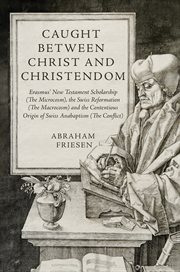
Already in his 1503 Enchiridion - some five years before his work on the New Testament - the great Christian humanist, Desiderius Erasmus, observed: "We are living in a world that has grown alien to the world of Christ in life and doctrine." In the Paraklesis, the introduction to the first, 1516, edition of his New Testament, he explained how this had come about: "We drag down the teachings of heaven and force them like a Lydian rule to fit our own life-patterns." To explain this phenomenon, however, he made a slight change in Romans 12: 11 of his 1519 New Testament: "Never be lacking in zeal, but keep your spiritual fervour, serving the Lord," to "serving the time." Based on a passage in Chrysostom's writings, this change allowed Erasmus to explain, if not justify, the Church's accommodation of Christ's teachings to the changing times. Several years later, in 1522, he published his Paraphrase on the Gospel of Matthew. Blaming the problem on the absence of any teaching in the practice of infant baptism, Erasmus, in the preface, proposed teaching basic Christian doctrine to young people when they had reached the age of puberty. But then in his paraphrase on Matthew 20: 18-20 - known then as "Christ's command to baptize," he laid out a comprehensive interpretation of adult, believer's baptism. Ulrich Zwingli picked up Erasmus' accommodation in 1522; Erasmus' radical followers chose believer's baptism on January 21, 1525. Unresolved in Erasmus' mind, these two conflicting positions were thus introduced to the Swiss Reformation, causing the conflict this study depicts
Mode of access: World Wide Web