






Nonfiction
eAudiobook
Details
PUBLISHED
Made available through hoopla
EDITION
DESCRIPTION
1 online resource (1 audio file (7hr., 37 min.)) : digital
ISBN/ISSN
LANGUAGE
NOTES
Read by Joe Eyre
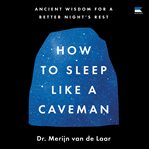
Sapiens meets Why We Sleep in an evolutionary romp through the science of sleep-and how we can get better rest-by one of the world's leading sleep scientists. We spend roughly a third of our lives in bed, but for millions of us, not all of that time is spent sleeping. We strive for eight hours per night, only to lie awake thanks to stress, our ever-present devices, a new baby, or that 4pm coffee you thought you needed. As sleep scientist and recovering insomniac Merijn van de Laar shows, we're hardly the first to experience this. When homo sapiens evolved hundreds of thousands of years ago, when saber-toothed tigers were their biggest nighttime worry, wakefulness served to protect one's tribe at night. Research shows these episodic sleep patterns even gave our ancestors an evolutionary advantage. We can look to their example for guidance in improving our sleep health, too: how our sleep patterns change as we age, the benefits of communal sleep, the importance of environmental factors such as temperature and light. While our myriad gadgets may distinguish us from early humans, understanding the ways our brains evolved to rest can chart the course toward a better night's sleep. Drawing from emerging science, archeological research into our ancestors' habits, and close observation of contemporary hunter-gatherer cultures, How to Sleep Like a Caveman explains everything from why we sometimes jerk awake at night-likely a remnant of having slept in trees-to why our efforts to "optimize" our sleep schedules might just be a fool's errand. The result is a surprising, accessible new framework for thinking about sleep-the way we were designed to
Mode of access: World Wide Web