






Nonfiction
eBook
Details
PUBLISHED
Made available through hoopla
DESCRIPTION
1 online resource
ISBN/ISSN
LANGUAGE
NOTES
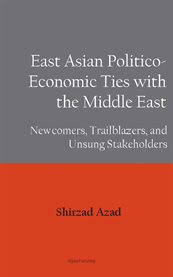
Shirzad Azad shows that strengthening ties between East Asia and the Middle East are replacing Iran's dependence on unreliable partners. The book highlights how key East Asian nations-China, Japan, South Korea, and others-are fostering stronger political, economic, and cultural connections with Middle Eastern countries, amid shifting global dynamics. While the U.S. continues to assert influence in the Middle East, often treating the region as an area of strategic exploitation, East Asian nations are forging mutually beneficial relationships that emphasize cooperation, investment, and growth. China's Belt and Road Initiative: A Game-Changer for the Middle East: Central to the discussion is China's Belt and Road Initiative (BRI), which has been a driving force behind the deepening ties between East Asia and the Middle East. Azad explains how the BRI serves as a bridge for economic and infrastructure collaboration, particularly with nations such as Iran, Saudi Arabia, and Turkey. As China invests in infrastructure projects, energy partnerships, and trade routes, it's becoming a key stakeholder in the region's development. This cooperation challenges the traditional U.S. dominance in the Middle East and reshapes the geopolitical landscape. The author delves into how these partnerships are reshaping not just economies, but also diplomatic relationships. Iran's Strategic Role in East Asian Engagement: It focuses on Iran, given its pivotal role as a bridge between East Asia and the Middle East. As the U.S. continues to impose sanctions and isolate Iran, East Asian countries are engaging with Iran economically and diplomatically, recognizing its strategic importance both geographically and in terms of natural resources. Azad emphasizes that China, Japan, and South Korea are making calculated efforts to strengthen ties with Iran, looking beyond the political tensions stirred by the West. Japan and South Korea: Rising Players in Middle Eastern Politics: In addition to China, Japan and South Korea have emerged as trailblazers in the Middle East. Both nations are seeking to secure energy resources, particularly oil and natural gas, while expanding trade and investment in technology, manufacturing, and other industries. Azad explores how Japan and South Korea, traditionally quiet players on the global political stage, are beginning to assert themselves more in Middle Eastern affairs, building alliances that go beyond economics to include political and cultural ties. Cultural and Diplomatic Ties: More than Just Business: What sets the East Asian approach apart from the Western model of engagement with the Middle East is the emphasis on building cultural and diplomatic ties, not just economic ones. Azad highlights how initiatives in education, tourism, and cultural exchange are helping to foster mutual understanding and cooperation between these regions. A Shift in Global Power Dynamics: His analysis suggests that the growing ties between East Asia and the Middle East are reshaping global power dynamics. As the U.S. continues to focus on military and strategic dominance, East Asian countries are quietly positioning themselves as essential partners in the development of the Middle East, influencing the region's future in ways that prioritize mutual growth and cooperation. A New Era of Cooperation: Shirzad Azad's East Asian Politico-Economic Ties with the Middle East explores the evolving partnerships between these two vital regions. By analyzing their political, economic, and cultural connections, the book sheds light on the global impact of these strategic alliances. It offers valuable insights into the dynamics shaping future cooperation and their implications for international relations
Mode of access: World Wide Web